
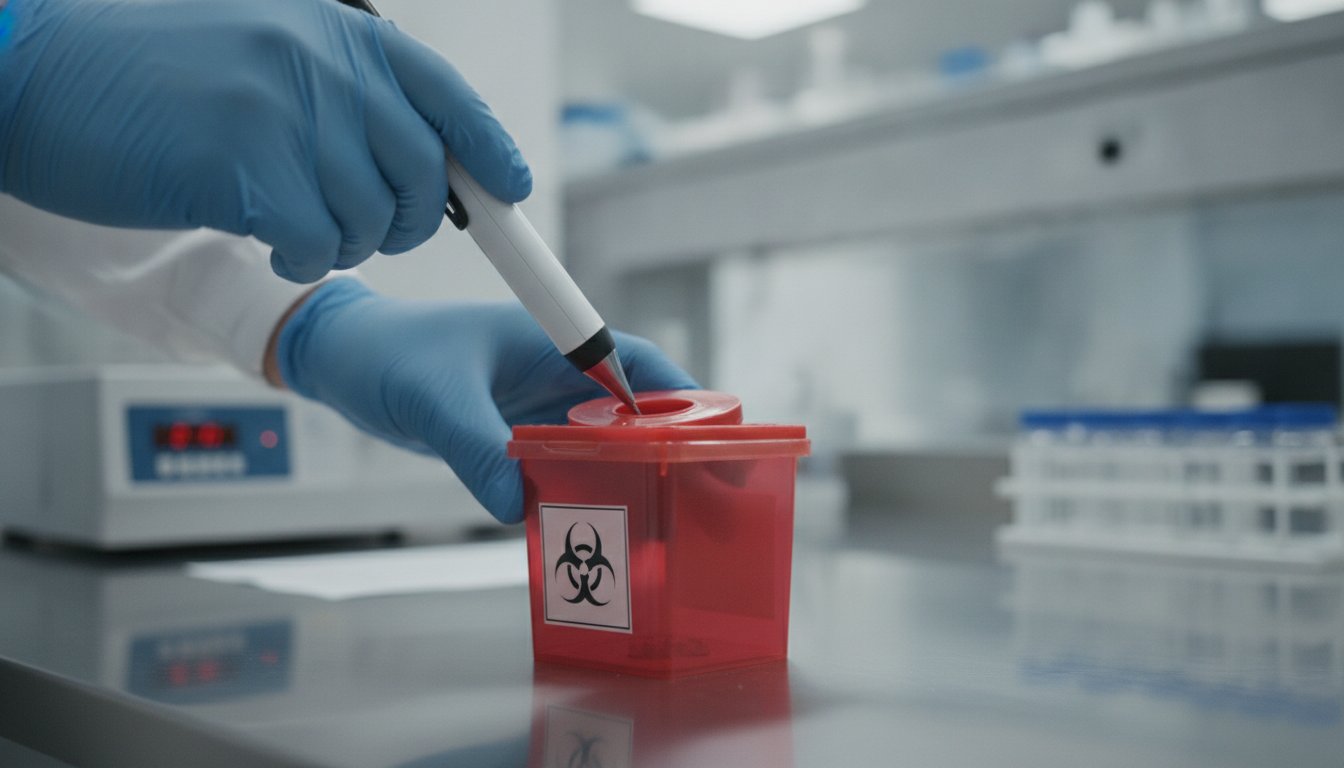
Your laboratory's safety record isn't just about what happens during the experiment. It's defined by what happens after the final injection. Many researchers mistakenly treat research-grade waste like standard medical trash, yet the July 2026 OSHA Hazard Communication Standard updates have made the safe disposal of used research peptide pens a matter of strict legal liability. You likely recognize the tension between maintaining a fast-paced workflow and the tedious requirements of hazardous waste management. It's a high-stakes balance. A single needle stick or a mislabeled sharps container can trigger a regulatory audit or an environmental safety breach.
This guide provides a definitive protocol for mastering clinical standards and achieving a zero-incident laboratory environment. We'll break down the ISO 10993-1:2025 risk management shifts and the specific GHS regulations governing chemical residue. You'll learn exactly how to manage your sharps inventory, from selecting FDA-cleared containers to utilizing pharmacy take-back programs for maximum efficiency. Precision in the lab requires precision in disposal. By following this 2026 protocol, you ensure your facility remains compliant while protecting your team from accidental exposure and ensuring your research data isn't compromised by safety lapses.
Key Takeaways
- Distinguish between biohazardous sharps and chemical reagent waste to align with the updated July 2026 OSHA standards.
- Implement a rigid SOP for the safe disposal of used research peptide pens that prioritizes immediate decontamination and safety lock engagement.
- Eliminate the "empty pen" myth by properly managing the residual 1-5% of reagent volume that remains in the reservoir post-assay.
- Establish immediate "Wash, Flush, Report" emergency sequences to mitigate the impact of accidental needle sticks or chemical exposure.
- Reduce total laboratory waste volume by transitioning to pre-filled pen formats that streamline the disposal lifecycle.
Classification of Research Peptide Pen Waste in 2026
Research peptide pens are not simple plastic tools. They represent a sophisticated category of hybrid waste, integrating mechanical delivery systems with high-precision needles and potent chemical reagents. Classification matters. In a laboratory setting, these devices don't fit neatly into a single waste stream. They are multi-component hazards. This complexity is why the safe disposal of used research peptide pens requires a protocol that addresses both physical and chemical risks simultaneously. Relying on standard medical waste procedures often overlooks the specific reagent residues found in high-purity research materials.
Regulatory oversight for these items has tightened significantly. As of July 2026, the updated OSHA Hazard Communication Standard and EPA guidelines for in-vitro research materials demand stricter accountability. These agencies no longer view the pen as a single unit but as a combination of sharps and hazardous chemicals. A comprehensive Sharps waste overview reveals that laboratory sharps require specialized containment that accounts for both physical puncture risks and chemical contamination. Disposing of these pens in regular trash is never an option. Doing so creates an immediate safety breach, exposing custodial staff to needle sticks and the environment to unneutralized chemical compounds.
The Components of a Research Pen
The mechanical housing of a research pen is typically composed of high-durability medical-grade plastics and internal spring mechanisms. These materials don't biodegrade and can interfere with standard recycling streams. The needle assembly, whether integrated or detachable, represents a primary biohazard. Even after an assay is complete, reservoirs may contain trace amounts of high-purity compounds such as Retatrutide 40mg, which mandates chemical hazard protocols. Understanding the safe disposal of used research peptide pens means recognizing that you are disposing of a pressurized mechanical system, a sharp, and a chemical reagent all at once.
Legal Implications of Improper Disposal
Non-compliance carries heavy weight. Laboratories found violating waste management standards face severe financial penalties and institutional fines that can stall operations for months. Beyond the immediate cost, improper disposal jeopardizes laboratory certifications and can lead to the revocation of grant eligibility from major funding bodies. Regulatory inspectors now look for documented proof of destruction as part of their standard audits. The 'Chain of Custody' for research chemicals is the immutable, documented log of handling that tracks a compound from its arrival at the facility through its final, verified destruction.
Step-by-Step Protocol for Safe Pen Disposal
Disposal is the final stage of the laboratory assay. It requires the same precision as the initial synthesis or reconstitution process. In a high-throughput environment, the safe disposal of used research peptide pens must be a standardized reflex rather than a secondary thought. Efficiency doesn't excuse negligence. Following a rigid five-step sequence ensures that your team stays protected and your facility remains within the bounds of 2026 regulatory frameworks. Choosing high-efficiency pre-filled formats simplifies this entire lifecycle by reducing the manual handling required for sharps waste.
- Step 1: Decontamination. Wipe the pen's exterior with 70% isopropyl alcohol immediately post-assay to neutralize any surface-level reagents.
- Step 2: Securing the Sharp. Engage the safety lock or recap the needle according to your specific lab SOP. Never leave a needle exposed on a benchtop.
- Step 3: Containment. Deposit the entire pen unit directly into an approved, puncture-resistant sharps container.
- Step 4: Verification. Document the disposal in your laboratory reagent log. Record the batch number, timestamp, and the individual responsible for the disposal.
- Step 5: Destruction. Schedule final disposal through an authorized hazardous waste contractor once containers reach capacity.
Handling Integrated Needle Systems
Integrated needle systems are common in modern research pens. Don't attempt to dismantle these units. Trying to separate the needle from the high-durability plastic housing increases the risk of accidental sticks. More importantly, forced disassembly can aerosolize residual peptides. This creates an inhalation hazard for lab personnel. This is a critical consideration in studies investigating cell culture contamination risk, where airborne residues can compromise the integrity of adjacent samples. Keep the pen intact. Let the sharps container handle the entire assembly.
Sharps Container Standards for 2026
Container selection is no longer generic. For 2026, laboratories must distinguish waste streams by color. Red containers are reserved for biohazardous materials, while yellow containers indicate chemical hazards. If your research involves potent reagents, the yellow stream is often the more compliant choice. Follow the FDA sharps disposal guidelines to ensure your facility maintains federal compliance. Adhere strictly to the "Three-Quarters Full" rule. Overfilling a container is a primary cause of puncture incidents during transport. Once the waste reaches the 75% fill line, seal it permanently and label it as research-only hazardous waste. This precision ensures a zero-incident environment.
Managing Residual Reagents and Chemical Hazards
The "Empty" Pen Myth is a dangerous assumption in high-purity research. Even when the mechanical plunger reaches its terminal point, the reservoir isn't dry. Physical constraints within the pen's internal architecture typically leave 1% to 5% of the original reagent volume behind. In a laboratory setting, this residue isn't negligible. It's a concentrated chemical hazard. The safe disposal of used research peptide pens hinges on acknowledging that a "finished" pen is never truly empty. These trace amounts of potent compounds like MOTS-c 40mg can still exhibit high reactivity or biological activity if they leach into groundwater systems. Referencing a professional Laboratory hazardous waste guide is essential to ensure these small volumes don't lead to outsized environmental liabilities.
Peptide Stability and Disposal
Peptide degradation isn't just a concern for assay accuracy. It's a disposal risk. Once a pen is activated, the clock starts on its chemical stability. The relationship between peptide stability after opening and disposal urgency is direct. As peptides break down into constituent amino acids or secondary degradation products, the hazard profile of the waste can shift. This is particularly true for high-concentration research reagents that may require specific neutralization protocols before they enter the sharps waste stream. Don't let used pens sit in ambient temperature bins for extended periods. Rapid sequestration in puncture-resistant containers prevents the release of volatile or degraded residues.
Specific Compound Considerations
Different compounds demand different waste characterization. For example, handling copper-peptide residues from GHK-Cu 100mg pens adds a heavy-metal consideration to your lab's waste profile. These residues can't be treated as simple organic waste. Similarly, the disposal of metabolic research tools like NAD+ 1000mg requires attention to the concentration of the remaining solution. To maintain precise compliance, utilize lot-specific documentation. Reports from Janoshik Analytical provide the chemical purity data necessary for accurate waste characterization. This transparency ensures that your hazardous waste contractor knows exactly what they're neutralizing. The safe disposal of used research peptide pens is only possible when you have full visibility into the chemical identity of the waste you're producing. High-purity reagents require high-standard destruction.

Emergency Protocols: Needle Sticks and Exposure
Even with a rigorous protocol for the safe disposal of used research peptide pens, accidental exposure remains a critical laboratory risk. A needle stick isn't just a physical injury. It's a potential introduction of high-purity reagents into the bloodstream. When an incident occurs, the response must be instantaneous and methodical. Speed is the primary variable in mitigating long-term toxicological impact. Institutional health and safety (EHS) records depend on these immediate actions to maintain facility certifications and personnel safety standards.
Personnel must follow the "Wash, Flush, Report" sequence without deviation. Immediately wash the puncture site with soap and running water for several minutes. Don't squeeze the wound, as this can increase tissue trauma and potentially accelerate systemic absorption. If a reagent splash hits the eyes or mucous membranes, use an emergency eyewash station to flush the area for at least 15 minutes. Reporting the incident to your supervisor and EHS department is a mandatory compliance step that ensures proper medical follow-up and documentation for insurance and regulatory audits.
Standard medical treatments often fail to account for the unique molecular structures of research-grade compounds. This is why the Safety Data Sheet (SDS) is your most valuable asset during an emergency. It provides the specific chemical identifiers and known reactivity data needed for a specialized toxicology assessment. Because these compounds are often intended for in-vitro use only, clinical data might be scarce. This makes the chemical purity profile essential for medical personnel to determine the appropriate intervention strategy.
First Response for Accidental Exposure
Percutaneous injuries require immediate evaluation at an occupational health clinic. Bring the SDS and any available analytical data to the treating physician to facilitate an accurate risk assessment. If a splash occurs during the safe disposal of used research peptide pens, ensure the flushing protocol is strictly timed and documented. It's imperative to identify the exact lot number of the compound involved to provide toxicologists with precise purity and batch information.
Mitigating Future Risks
Prevention is rooted in hardware integrity and behavioral discipline. Reviewing protocols on preventing freeze-thaw damage ensures that pen reservoirs and needle seals don't become brittle or prone to leaking during handling. Implement a strict "No-Recap" policy to eliminate the most common cause of needle sticks in the lab. Regular safety audits of your sharps disposal stations will confirm that containers are accessible, properly labeled, and never overfilled. For laboratories prioritizing safety and precision, sourcing reliable pre-filled research pens reduces the manual handling steps where most accidents occur.
ReadyPep: Ethical Research from Delivery to Disposal
ReadyPep doesn't just provide reagents. We provide a complete framework for research accountability. The safe disposal of used research peptide pens is the natural conclusion to a high-standard laboratory workflow. By choosing pre-filled hardware, you significantly reduce the physical volume of laboratory waste. Traditional methods involving separate vials, syringes, and mixing needles often generate a higher volume of sharps waste compared to a single integrated pen. Efficiency starts with the format. It's about reducing the footprint of your research without sacrificing the precision of your data.
The precision of ReadyPep protocols ensures that reagent waste is kept to an absolute minimum. You don't have to worry about over-reconstitution or the disposal of unspent excess in a vial. Every microliter is accounted for. This transparency supports research integrity, as high-purity standards ensure that your waste characterization is as accurate as your assay results. When you know exactly what's in the reservoir, you can dispose of it with total confidence in your compliance.
Streamlining the Lab Workflow
Pre-filled hardware removes the friction of manual assembly. This directly reduces the frequency of sharps incidents during the preparation phase. For high-frequency metabolic studies, the Reserve Protocol offers a streamlined approach that minimizes handling time and disposal complexity. Safe handling begins even before the pen reaches your bench. Professional cold-chain shipping ensures that the hardware and the peptide remain structurally intact. This prevents the leaks or brittle plastic failures that complicate the safe disposal of used research peptide pens later in the lifecycle. It's a seamless progression from receipt to destruction.
A Call to Professional Excellence
Maintaining ethical waste standards is a collective responsibility. It reflects the sophistication of your laboratory operations. ReadyPep supports this by providing HPLC and pH verification for every lot. This data isn't just for your results. It's for your EHS compliance. Knowing the exact chemical profile allows for precise neutralization and disposal. Don't compromise on safety or data quality. Professional research demands professional tools. Elevate your laboratory standards with pre-filled, high-purity research pens from ReadyPep.
Standardizing Laboratory Safety for 2026
Precision in the lab doesn't end when the assay is complete. It ends when the waste is neutralized. You've now mastered the hybrid classification of peptide waste and the critical "Wash, Flush, Report" sequence. These protocols represent the baseline for 2026 regulatory compliance. Adhering to the safe disposal of used research peptide pens protects your data integrity and your personnel from accidental exposure. It's about closing the loop on laboratory hazards with authoritative confidence.
ReadyPep simplifies this lifecycle by providing reagents optimized for in-vitro research precision. Every lot undergoes independent Janoshik Analytical testing to verify purity levels. We ensure hardware stability through free global cold-chain shipping, preventing the brittle failures that lead to disposal incidents. Don't let safety be an afterthought in your workflow. Secure your laboratory research with lot-tested, pre-filled peptide pens from ReadyPep. Elevate your standards. Protect your team. Achieve excellence.
Frequently Asked Questions
Can I dispose of used research peptide pens in standard recycling bins?
No, you must never place these devices in standard recycling or trash bins. They are classified as hybrid waste. The mechanical components, needles, and residual reagents require specialized handling to meet GHS hazardous waste regulations. Standard facilities aren't equipped to process the complex materials found in professional research injectors.
Do I need to remove the needle from a pre-filled pen before disposal?
No, you shouldn't attempt to remove the needle from an integrated pen system. Dismantling the hardware increases the risk of accidental punctures and the aerosolization of high-purity compounds. Place the entire unit into a puncture-resistant container to maintain the safe disposal of used research peptide pens without compromising lab safety.
What size sharps container is best for high-volume peptide research?
Choose a container size that matches your laboratory's three-month waste volume. FDA-cleared containers typically cost between $5 and $30 depending on their capacity. Selecting a size that fills within a 90-day window ensures you meet recommended disposal frequencies and prevents the accumulation of degraded chemical residues in your workspace.
How do I dispose of a research pen that still contains a significant amount of peptide?
Treat pens with significant residual volume as full hazardous chemical waste rather than simple sharps. Don't try to drain the reservoir manually, as this creates an inhalation and exposure hazard. Keep the pen intact and ensure it's deposited in a yellow-coded container if the reagent concentration exceeds your facility's biohazard thresholds.
Are there specific 2026 regulations for disposing of Retatrutide or other GLP-1 analogs in a lab?
Yes, the July 2026 OSHA updates mandate stricter labeling and tracking for research-grade reagents. Compounds like Retatrutide must be handled according to their specific Safety Data Sheets. Your lab must maintain a documented chain of custody from receipt to the final safe disposal of used research peptide pens to ensure full regulatory compliance.
What should I do if a sharps container becomes overfilled?
Stop using the container immediately once it reaches the three-quarters full line. Never shake or force pens into a crowded bin. Seal the lid permanently and start a new container. Overfilling is a primary cause of needle sticks and environmental contamination during the transport of laboratory waste to destruction facilities.
Can research peptide pens be autoclaved before disposal?
Most research peptide pens shouldn't be autoclaved. The combination of high-durability plastics, internal spring mechanisms, and pressurized reservoirs can lead to mechanical failure or the release of toxic vapors under high heat. Stick to chemical decontamination of the exterior followed by direct deposit into a validated sharps container.
How long can I store used pens in a sharps container before final pickup?
You should schedule a final pickup or drop-off within three months of placing the first item in the container. This 90-day window is the industry standard for preventing chemical leaching and maintaining a zero-incident environment. Storing waste longer can lead to container degradation or regulatory non-compliance during institutional safety audits.
Disclaimer
Educational content only. Not medical advice.


