
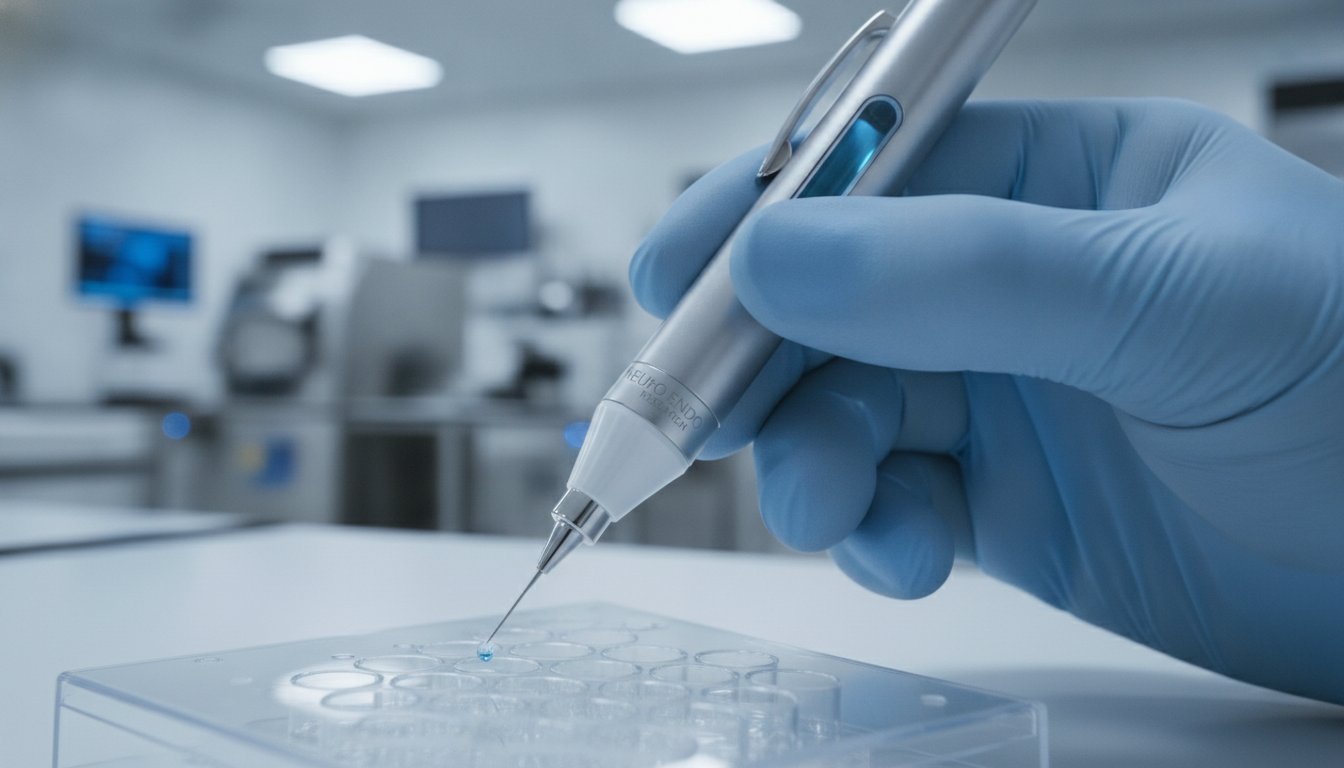
How much of your HPG axis assay's variance is actually hidden in the manual reconstitution process? It's a question every neuroendocrine researcher faces when data doesn't align. You understand that even a minor pipetting error or a slight fluctuation in aqueous pH can compromise your results. Manual handling introduces variables that shouldn't exist in a controlled laboratory environment. The Kisspeptin 10mg pre-mixed pen addresses these friction points by providing a standardized, ready-to-use reagent that eliminates the variability of traditional prep.
We're here to help you secure publication-grade data without the administrative burden of manual peptide handling. This guide provides a technical deep dive into the stability and precision of pre-mixed formats for in-vitro models. We'll examine the chemical stability of Kisspeptin-10; the risk mitigation of contamination-free delivery; and the 2026 regulatory landscape affecting research-grade availability. By the end of this reference; you'll understand how to optimize your laboratory workflows for maximum reproducibility and efficiency while staying compliant with current research standards.
Key Takeaways
- Identify the specific mechanism by which Kisspeptin-10 activates the KISS1R receptor to drive neuroendocrine signaling.
- Discover how the Kisspeptin 10mg pre-mixed pen prevents the common volumetric errors that compromise manual reconstitution.
- Examine the critical role of the Gq/11-coupled pathway and intracellular calcium mobilization in HPG axis research.
- Establish the precise storage and temperature parameters required to maintain aqueous peptide stability in the lab.
- Learn the verification standards for sourcing high-purity peptides with full third-party documentation for 2026 studies.
Understanding Kisspeptin-10 in Neuroendocrine Laboratory Models
Kisspeptin-10 (KP-10) represents the minimal pharmacophore of the KISS1 gene product. It's a decapeptide that retains full bioactivity at the G protein-coupled receptor KISS1R. For researchers, Understanding Kisspeptin requires recognizing its pivotal role in the hypothalamic-pituitary-gonadal (HPG) axis. It acts as the primary gatekeeper of puberty. The 10mg concentration provided in a Kisspeptin 10mg pre-mixed pen is specifically calibrated for high-throughput screening and dose-response modeling. This concentration allows for precise micro-molar dilutions without the volumetric errors common in smaller, non-standardized samples. It ensures that every assay starts with a verified baseline, which is critical for establishing the potency of neuroendocrine triggers in cell culture.
The Molecular Structure of KP-10
The sequence consists of ten amino acids: Tyr-Asn-Trp-Asn-Ser-Phe-Gly-Leu-Arg-Phe-NH2. The C-terminal amidation is not just a structural detail; it is essential for high-affinity binding to KISS1R. While KP-54 is the full-length peptide, KP-10 is the preferred reagent for in-vitro studies due to its superior solubility and standardized potency. Using a Kisspeptin 10mg pre-mixed pen ensures that this delicate sequence remains stable in an aqueous environment. It protects the peptide from the mechanical degradation often seen during manual reconstitution. This stability is vital when measuring receptor internalisation or long-term cellular responses where peptide integrity must be guaranteed over several hours.
Research Applications in Reproductive Endocrinology
In-vitro models focus heavily on the activation of GnRH neurons. Researchers utilize immortalized cell lines, such as GT1-7 or GN11, to measure how KP-10 triggers gonadotropin-releasing hormone pulses. These assays are vital for investigating the secondary messenger pathways of LH and FSH secretion. They also help researchers map the negative and positive feedback loops within the HPG axis. Many laboratories use these models to study the pathophysiological mechanisms of idiopathic hypogonadotropic hypogonadism. Standardizing these experiments requires a reliable source of the peptide that eliminates preparation variance. The Kisspeptin 10mg format provides the high-precision dosing needed for publication-grade reproducibility. It removes the guesswork from laboratory preparation, allowing researchers to focus on data acquisition rather than reagent variability.
Signal Transduction Mechanisms: Kisspeptin and the KISS1R Pathway
The efficacy of Kisspeptin-10 in neuroendocrine laboratory models depends on its precise interaction with the G protein-coupled receptor KISS1R (formerly GPR54). Binding initiates the Gq/11-coupled signaling cascade. This activation triggers Phospholipase C (PLC), which hydrolyzes phosphatidylinositol 4,5-bisphosphate (PIP2) into inositol 1,4,5-trisphosphate (IP3) and diacylglycerol (DAG). IP3 then facilitates a rapid mobilization of intracellular calcium from the endoplasmic reticulum. This calcium spike is the definitive signal for GnRH secretion. Without high-purity reagents, these intracellular signals become "noisy," leading to inconsistent EC50 values and unreliable data. Utilizing a Kisspeptin 10mg pre-mixed pen ensures the peptide arrives in a stabilized format, preserving its potency for these sensitive binding assays.
Beyond the primary calcium response, KP-10 activates the mitogen-activated protein kinase (MAPK) and PI3K/Akt pathways. These secondary cascades are vital for researchers studying cellular growth, differentiation, and survival in immortalized GnRH cell lines. Purity directly dictates the binding affinity. Contaminants or degraded peptide fragments compete for receptor sites, artificially inflating the concentration required to reach half-maximal excitation. If your research demands high-precision kinetics, you should verify your peptide standards through empirical data rather than relying on supplier marketing.
Aqueous Stability and pH Optimisation
Peptides are notoriously unstable once in solution. Aqueous environments often accelerate deamidation and oxidation, which can neutralize biological activity within days. Pre-mixed pens solve this by utilizing pH-balanced buffers specifically designed to maintain the peptide's ionic state. This optimization extends the functional half-life of the solution. It prevents the premature degradation that typically occurs when researchers use non-standardized bacteriostatic water for manual reconstitution. Consistency in pH isn't just about stability; it's about ensuring receptor binding remains predictable across different experimental batches.
Verifying Purity for Publication Integrity
Publication-grade research requires transparent verification. Standard HPLC (High-Performance Liquid Chromatography) and Mass Spectrometry are the industry benchmarks for confirming a 99%+ purity rating. These tests identify residual trifluoroacetic acid (TFA) or truncated peptide sequences that could interfere with HPG axis assays. We advocate for independent third-party analysis, such as Janoshik, to provide an unbiased secondary layer of verification. A Kisspeptin 10mg pre-mixed pen backed by lot-specific documentation removes the uncertainty of laboratory prep. It allows you to focus on the signal, not the impurities in your reagent.
Pre-mixed Pens vs. Lyophilised Vials: Enhancing Research Reproducibility
The "Reconstitution Gap" is a documented source of error in neuroendocrine research. Manual preparation of a 10mg lyophilised vial requires a high degree of volumetric precision. A minor variance in diluent volume, for example 50 microliters in a 2ml prep, shifts the final concentration by 2.5%. For assays measuring subtle Gq/11 pathway activation, this shift is significant. The Kisspeptin 10mg pre-mixed pen provides a solution to this variability. It arrives pre-standardised in a pH-balanced aqueous environment. This eliminates the need for manual mixing and the associated risk of volumetric drift.
Mechanical precision is the core advantage of the pen format. Manual pipetting relies on human dexterity and pipette calibration. In contrast, the pen utilizes a mechanical displacement system. Each "click" delivers a factory-calibrated volume. This consistency is vital for high-throughput screening. It ensures that every well in a 96-well plate receives the exact same molar dose. You don't have to worry about tip retention or bubble interference. The physics of the Kisspeptin 10mg pre-mixed pen click mechanism outperforms the variability of the hand. The 2026 laboratory standard favors this type of automation to reduce manual interaction and human error.
Precision Dosing Mechanics
Calculating molar concentrations is simplified with the pen's incremental delivery. Each click corresponds to a fixed volume, allowing for rapid dilution protocols. This mechanical delivery also reduces reagent waste. In traditional vial preparation, "dead volume" often traps expensive peptide at the bottom of the glass. The Kisspeptin 10mg pen uses a specialized plunger that clears the entire chamber. This maximizes the utility of the 10mg lot. It ensures that your laboratory budget is spent on data, not discarded residue.
Aseptic Handling in Cell Culture
Maintaining an aseptic environment is paramount for GnRH cell line longevity. Every time a vial septum is punctured, the risk of ambient contamination increases. Oxidation also begins the moment air enters the vial. Pre-filled pens function as sealed systems. The peptide remains protected from environmental exposure until the moment of delivery. This integration into cell culture protocols reduces the frequency of contamination-related assay failures. It's a more streamlined approach to maintaining sterile conditions without adding complexity to the workflow. Precision and safety are no longer mutually exclusive in modern neuroendocrine research.

Handling and Storage Protocols for Aqueous Kisspeptin Solutions
Peptide stability in an aqueous state requires uncompromising cold-chain integrity. Temperature control is non-negotiable. From the manufacturer to your laboratory bench; the range must remain narrow to prevent structural degradation. The Kisspeptin 10mg pre-mixed pen is particularly susceptible to thermal fluctuations. These changes can lead to peptide aggregation or hydrolysis. Researchers must establish a clear verification protocol for every shipment received. It's the only way to guarantee the baseline purity required for HPG axis assays.
Cold-Chain Monitoring and Verification
Upon arrival; check the shipment's temperature indicators immediately. A successful delivery should feel cold to the touch. It shouldn't show signs of leakage. If the solution appears cloudy or contains visible precipitates; it suggests a temperature excursion occurred during transit. You can find more technical details on Verifying cold chain integrity to ensure your reagents meet analytical standards. Documenting these initial conditions in your lab notebook is the first step toward experimental reproducibility.
Long-term storage requires a dedicated laboratory refrigerator. Maintain it at 2°C to 8°C (36°F to 46°F). Don't store pens in the door. Temperature fluctuations happen there most frequently. It's a risk to your data. Light sensitivity is another critical factor. UV exposure can catalyze the oxidation of tyrosine residues in the KP-10 sequence. Keep the pens in their original opaque packaging. Shield them from light until the moment of use. This simple step prevents UV-induced degradation that can skew your EC50 values.
Post-Opening Shelf Life
Once the seal is broken; the countdown for aqueous stability accelerates. While the pH-balanced buffers in the Kisspeptin 10mg pre-mixed pen extend functional life; we recommend completing assays within 30 days of the first use. Never subject aqueous peptide solutions to freeze-thaw cycles. This process creates mechanical stress. It shears the peptide chains. They become biologically inactive. If you need consistent results across long-term studies; you should order fresh Kisspeptin 10mg pens in staggered batches rather than stockpiling single lots.
Disposal must follow standard biohazard protocols for chemical injectors. Even though these are for in-vitro research; the delivery mechanism requires a sharps container. Proper documentation of the lot number and expiration date for every assay is essential. It allows other researchers to replicate your findings. Precision in storage is just as important as precision in dosing. Don't let poor handling compromise months of research.
Sourcing High-Purity Kisspeptin 10mg Pens for 2026 Studies
Sourcing high-purity reagents in 2026 demands more than just a purchase order. It requires a commitment to radical transparency and data-driven verification. As of July 2026; Kisspeptin-10 remains classified as a Category 2 substance by the FDA. This designation underscores the necessity for strictly "research use only" protocols in laboratory settings. While early 2026 saw significant public discussions regarding a potential reclassification to Category 1; no formal rule was published by March 2026. This regulatory flux makes verified purity and lot-specific documentation even more critical for institutional compliance. Using a Kisspeptin 10mg pre-mixed pen ensures that your lab is working with standardized materials that meet these rigorous 2026 expectations.
The ReadyPep Standard for Research Integrity
We prioritize empirical data over marketing hyperbole. Every lot undergoes independent verification by Janoshik Analytical. This third-party validation confirms purity levels of 99% or higher. It eliminates the risk of manufacturing impurities that could skew HPG axis receptor binding data or intracellular calcium spikes. The Kisspeptin 10mg Pre-filled Pen is designed for researchers who refuse to compromise on in-vitro accuracy. These pens arrive with lot-specific Certificates of Analysis (CoA). You can trace the identity and purity of your reagent from the synthesis lab to your bench. This level of documentation isn't just a luxury; it's a requirement for high-impact publication in neuroendocrine research.
Next Steps for Laboratory Procurement
Longitudinal neurogenesis studies often require bulk sourcing to maintain lot consistency over several months. Procurement teams must also navigate the complexities of international customs for research chemical orders. We provide the logistics infrastructure to handle temperature-sensitive reagents across global borders. Our cold-chain systems ensure that your Kisspeptin 10mg pre-mixed pen arrives within the required 2°C to 8°C window. This prevents the structural degradation and hydrolysis discussed in our handling protocols. By centralizing your sourcing; you reduce the administrative friction of multiple vendor audits. It's time to elevate your laboratory standards. Explore the full range of research-grade pens for your next study and secure the precision your data deserves.
Standardizing Your Neuroendocrine Research Benchmarks
Precision in the laboratory isn't just about the equipment you use; it's about the uncompromising reliability of your reagents. We've examined how standardized dosing mechanics and optimized aqueous stability solve the "reconstitution gap" that often plagues HPG axis assays. By removing manual prep variables, you ensure your data reflects true biological responses rather than pipetting errors or volumetric drift. The Kisspeptin 10mg pre-mixed pen represents a shift toward this streamlined, publication-grade accuracy that modern neuroendocrine research demands.
Quality shouldn't be a variable in your study. Every lot we provide adheres to Metatide Healthcare manufacturing standards and features Janoshik Analytical verified purity. We protect that integrity from our facility to your bench with free worldwide cold-chain shipping. This radical transparency allows you to focus on the signal, not the noise of potential contaminants or degraded fragments. If you're ready to eliminate friction and uncertainty in your next experimental series, you can secure high-purity Kisspeptin 10mg pens and experience the difference of a verified standard. Your research deserves reagents that are as rigorous as your own methodology.
Frequently Asked Questions
Is Kisspeptin-10 stable in a pre-mixed aqueous solution?
Kisspeptin-10 maintains stability in pre-mixed aqueous solutions when formulated with pH-optimized buffers. These buffers prevent the rapid deamidation and oxidation that usually occur in non-standardized water. While lyophilized formats are stable for longer durations; the pre-mixed pen is engineered for immediate use in active research cycles. It's essential to follow strict cold-chain protocols to preserve the peptide's ionic state and biological activity throughout its shelf life.
How does the 10mg concentration impact in-vitro dose-response testing?
The 10mg concentration provides a high-density baseline for establishing comprehensive dose-response curves in cellular assays. This specific mass allows researchers to perform extensive serial dilutions across multiple 96-well plates without the risk of running out of a single lot. Utilizing a Kisspeptin 10mg pre-mixed pen ensures that your starting concentration is verified; which is critical for calculating precise EC50 values in Gq/11-coupled signaling studies.
Can I use a pre-mixed pen for cell culture assays?
Pre-mixed pens are highly effective for cell culture assays because they provide a standardized, sterile reagent. The closed delivery system minimizes the risk of introducing ambient contaminants into immortalized GnRH cell lines. This format is particularly useful for longitudinal studies where consistent daily dosing is required. It removes the variability of manual reconstitution; ensuring that each cellular treatment remains identical to the last.
What is the difference between KP-10 and KP-54 in research?
KP-10 is the shortest functional decapeptide sequence of the KISS1 gene product, whereas KP-54 is the full-length protein. In most neuroendocrine laboratory models; KP-10 is preferred because it retains full bioactivity at the KISS1R receptor while offering superior solubility. The smaller size of KP-10 makes it easier to standardize for in-vitro binding assays; providing a more focused tool for investigating GnRH pulse generation and feedback loops.
How do I calculate the exact dosage from a pre-mixed pen click?
Exact dosage is determined by the mechanical displacement of the pen's internal plunger. Each click delivers a factory-calibrated volume of the 10mg solution; allowing for rapid conversion to molar concentrations. This mechanical precision eliminates the human error inherent in manual micropipetting. By knowing the total volume of the Kisspeptin 10mg pre-mixed pen; you can calculate the exact peptide mass per click to maintain rigorous experimental control.
Why is third-party testing critical for Kisspeptin research?
Third-party testing is the only way to verify that a peptide meets the 99%+ purity standard required for publication-grade data. Independent labs like Janoshik use HPLC and Mass Spectrometry to identify residual trifluoroacetic acid or truncated sequences. These impurities can interfere with receptor binding affinity and skew HPG axis results. Radical transparency in testing ensures that your research is built on a foundation of empirical verification rather than supplier claims.
What are the storage requirements for a Kisspeptin 10mg pen?
Storage requires a consistent temperature range of 2°C to 8°C in a dedicated laboratory refrigerator. Keep the pens in their original opaque packaging to protect the peptide from UV-induced degradation. Avoid storing the pens in refrigerator doors where temperature fluctuations are most common. Never freeze aqueous solutions; as the resulting mechanical stress can shear the peptide chains and neutralize their biological activity in your assays.
Are pre-mixed pens compatible with standard laboratory aseptic techniques?
Pre-mixed pens are fully compatible with standard aseptic techniques and often superior to traditional vials. The sealed system functions as a sterile barrier; reducing the need for repeated septum punctures that can introduce airborne pathogens. This design maintains a sterile environment for the peptide solution throughout its use. Integrating these pens into your cell culture protocols simplifies the workflow while enhancing the overall biosecurity of your laboratory environment.
Disclaimer
Educational content only. Not medical advice.


