
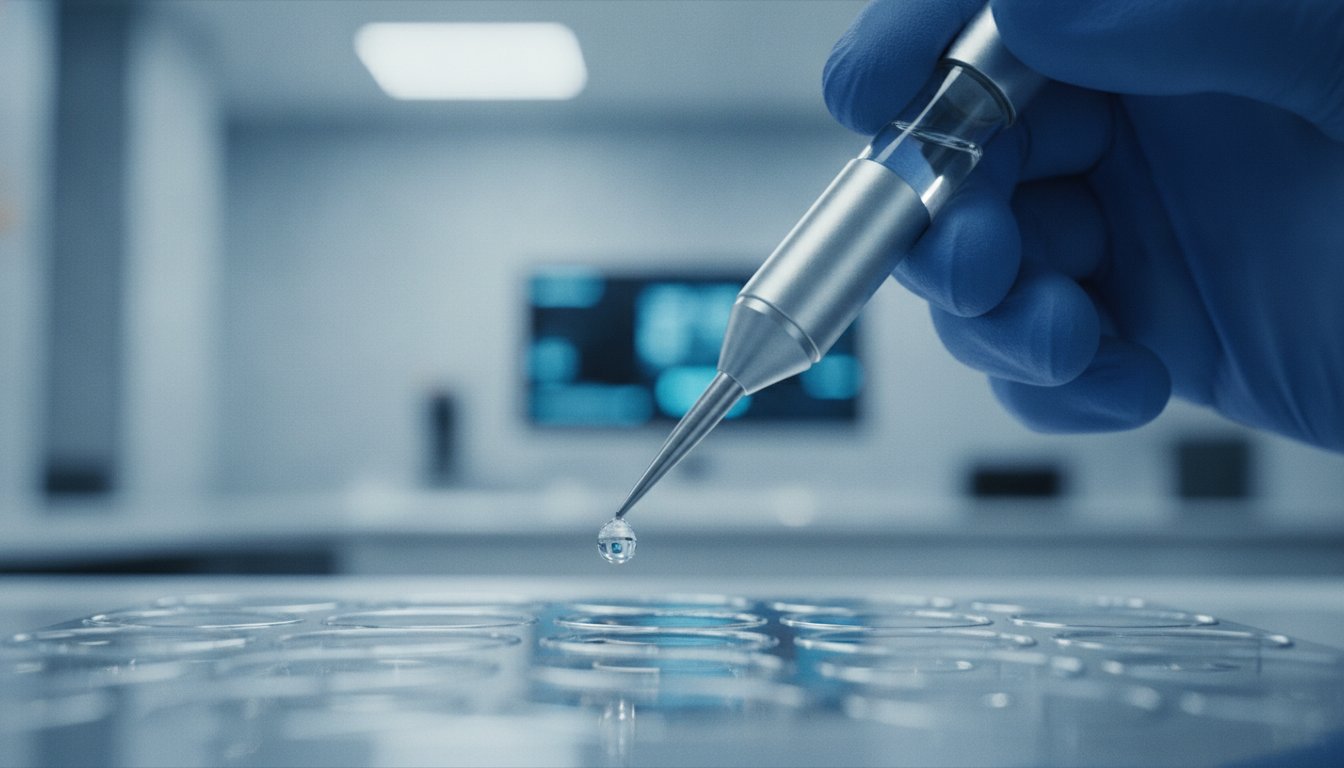
Manual vial reconstitution isn't just a chore; it's a variable your research can't afford. With independent analysis identifying contamination or improper dosing in approximately 30% of unregulated peptide samples, adding human error during manual dilution only compounds the risk. Improving lab workflow with pre-filled pens replaces the uncertainty of the pipette with clinical precision. It turns a tedious, multi-step preparation into a single, calibrated action. This is hardware-based automation designed for the modern bench scientist.
You've likely dealt with the frustration of inconsistent concentrations across different lots or the constant threat of contamination during syringe transfers. It's a massive drain on labor hours that should be spent on data analysis, not repetitive pipetting tasks. Transitioning to pre-filled research formats eliminates these pre-analytical bottlenecks and ensures your results are reproducible across every operator. This guide explores how making the shift reduces material waste and secures the integrity of your most critical experiments.
Key Takeaways
- Identify the hidden time-loss bottlenecks inherent in manual lyophilized powder handling and complex solvent calculations.
- Discover the specific mechanics of improving lab workflow with pre-filled pens through factory-reconstituted, pH-balanced solutions.
- Evaluate the Total Prep Time (TPT) for standard cell culture assays using a side-by-side efficiency audit of vials versus pen delivery.
- Implement a five-step protocol to audit peptide consumption and validate pen precision against your current manual standards.
- Standardize dosing with the click-dial mechanism to eliminate inter-operator variability and reduce contamination-related failures.
The Hidden Costs of Traditional Peptide Preparation in In-Vitro Research
The "reconstitution bottleneck" is a silent killer of laboratory productivity. It starts with the delicate handling of lyophilized powder. It continues through complex solvent calculations and multi-step dilution protocols. Each manual intervention introduces a point of failure. Traditional methods rely entirely on the researcher's steady hand and mental math. Even in elite facilities, this creates a significant variance in reagent concentration. Improving lab workflow with pre-filled pens addresses these inefficiencies by shifting the burden of preparation away from the bench.
In Lean management terms, manual preparation is rife with "Motion" and "Waiting" waste. Technicians spend hours moving between balances, hoods, and centrifuges. They wait for compounds to reach full dissolution. These minutes aggregate into lost days over a project's lifecycle. Shifting toward laboratory automation at the reagent level is the most direct way to reclaim this time. By utilizing factory-calibrated delivery systems, labs can bypass the prep-work that usually precedes the actual science.
Quantifying Manual Handling Errors
Pipetting fatigue is a documented reality. After dozens of repetitions, a researcher's precision naturally falters. Micro-variations in solvent volume might seem negligible, but they alter final molar concentrations significantly. When a 10mM solution is actually 9.4mM due to a pipetting slip, inter-operator reproducibility vanishes. These errors are often the root cause of the consequences of impure peptides in experiments. You don't just lose the reagent; you lose the validity of the entire assay. Independent analysis has shown that nearly 30% of research samples from traditional sources already suffer from dosing or purity issues. Manual handling only compounds this risk.
Contamination Risks in Open-Vial Systems
Vial septums aren't invincible. Repeated piercing creates micro-channels that compromise sterility. Every time a vial is opened or punctured in a hood, the risk of introducing atmospheric contaminants increases. Open vials invite atmospheric contaminants. Pre-filled pens seal integrity. This closed-system approach is vital for long-term cell culture studies where a single bacterial spore can end a month of work. Reducing the "invisible" cost of experiment retractions starts with better hardware. For labs focused on high-throughput precision, exploring the ReadyPep inventory provides a clear path to eliminating these traditional preparation hazards.
How Pre-filled Pens Streamline the Pre-analytical Phase
Ready-to-use (RTU) reagents are the gold standard in clinical diagnostics because they eliminate the variability of on-site preparation. In the research environment, this transition is happening through the adoption of factory-reconstituted formats. Improving lab workflow with pre-filled pens starts by removing the most volatile variable: the researcher's manual reconstitution process. These pens arrive with pH-balanced, stabilized solutions already calibrated for immediate use. You no longer need to spend time calculating solvent ratios or waiting for lyophilized powders to reach full dissolution. It's a plug-and-play solution for the bench.
The core of this efficiency is the 'click-dial' mechanism. This hardware provides a tactile, standardized method for dosing that bypasses the traditional calculation step. Instead of visually confirming a meniscus or a syringe line, the researcher selects a precise volume with a physical dial. This shift reduces the cognitive load during high-throughput sessions. Conducting a workflow efficiency audit often reveals that the highest friction points aren't the assays themselves, but the preparation preceding them. By adopting pre-filled pens, you effectively automate the delivery precision without the six-figure investment required for robotic liquid handlers.
Precision via Factory Calibration
Professional lot-standardization is the hallmark of modern reagent delivery. Manufacturers like Metatide Healthcare utilize industrial-grade equipment to ensure peptide stability in aqueous solution, a level of consistency difficult to achieve with manual benchtop methods. Each pen is a self-contained environment, protecting the compound from oxidation and thermal degradation better than open-vial systems. Pre-filled pens eliminate the need for analytical scales and complex dilution math in your daily protocols. Researchers looking to modernize their reagent handling can browse the full range of pre-filled research pens to see these efficiency gains in practice.
Reducing Lab Footprint and Equipment Needs
Space is a premium resource in any sterile environment. Traditional peptide work requires a clutter of vials, solvents, and specialized syringes. A single pre-filled pen replaces this entire kit, significantly reducing your lab footprint. This consolidation also leads to a marked reduction in biohazardous sharps waste, as the integrated systems are more efficient than disposable syringe-and-vial combinations. This hardware-centric approach is detailed further in our peptide pen vs syringe for lab work comparison. Improving lab workflow with pre-filled pens isn't just about speed; it's about creating a cleaner, more organized research environment.
Vials vs. Pre-filled Pens: A Workflow Efficiency Audit
Efficiency at the bench isn't just about how fast you work. It's about how many points of failure you remove from the process. A time-motion study reveals that traditional vial preparation is a fragmented sequence. You must swab the septum, assemble the syringe, draw the reagent, expel air bubbles, and visually verify the volume. For a standard 10-sample cell culture assay, these steps are repeated ten times. Improving lab workflow with pre-filled pens collapses this multi-step cycle into a single, calibrated action. Vials demand focus. Pens provide flow.
The Total Prep Time (TPT) difference is stark. In a high-throughput environment, the transition from cold storage to application is nearly instantaneous with a pen format. There's no waiting for dissolution or secondary dilution steps. This speed is a primary reason for the documented preference for the use of pre-filled pens among researchers who prioritize data throughput. Beyond speed, the learning curve for new lab personnel is significantly shorter. You don't have to train a junior researcher on the nuances of syringe meniscus reading when the hardware handles the measurement for them.
The 'Click' Advantage in High-Throughput Assays
Multi-dose pens allow for rapid sequential application without the need for reloading. This is critical during complex protocols where timing is a variable. The mental load on the researcher is reduced because the hardware provides tactile confirmation of the dose. In specialized fields, such as MOTS-c 40mg metabolic pathway research, maintaining a fast-paced dosing schedule is often necessary to capture transient cellular responses. Improving lab workflow with pre-filled pens ensures that the delivery system never becomes the bottleneck in your protocol.
Material Waste and Cost-Benefit Analysis
Traditional syringes suffer from "dead space" volume loss. This is the residual reagent trapped in the needle and hub that never reaches the target. Over a month of daily assays, this waste represents a significant percentage of your budget. When you factor in the value of a senior researcher's time, the ROI becomes clear. You can find more on justifying premium research chemical costs by analyzing these prep-time savings. Reducing prep-work by even 20 minutes a day saves over 80 hours of labor per year. That's time better spent on high-level analysis and publication.

5 Steps to Implementing Pre-filled Pens into Your Lab Protocol
Transitioning to a new reagent format requires a methodical approach to ensure data continuity. Improving lab workflow with pre-filled pens isn't just about upgrading your hardware; it's about systems integration. You're replacing a manual, high-variance task with a standardized delivery system. This shift demands a clear implementation strategy to maintain the integrity of your longitudinal studies. Follow these five steps to modernize your bench protocols without disrupting your data.
- Step 1: Audit Peptide Consumption. Review your inventory logs. Identify high-frequency protocols where repetitive pipetting is the primary bottleneck. These are the highest ROI candidates for pen transition.
- Step 2: The Pilot Study. Validate pen precision against your existing manual standards. Run a side-by-side assay to confirm that the factory-calibrated delivery matches your validated bench results.
- Step 3: Update SOPs. Rewrite your Standard Operating Procedures to reflect "click" increments. This removes the ambiguity of microliter estimation and provides researchers with tactile confirmation of the dose.
- Step 4: Integrate Documentation. Ensure all digital lab notebooks include lot-specific HPLC and MS data. Digital record-keeping is faster when reagent specs are factory-verified.
- Step 5: Cold-Chain Storage. Establish strict refrigeration protocols. Ready-to-use pens are stabilized but require consistent thermal management to maintain their calibrated potency throughout their lifecycle.
Calibrating Your Protocol to Pen Increments
Precision hinges on the translation of traditional molarity into hardware actions. Understanding how to calculate peptide dosage from a pen is the first hurdle for any team. You must translate your mg/mL requirements into specific pen "clicks" based on the concentration of the cartridge. For a compound like Retatrutide 40mg, this calibration ensures that every researcher on the project delivers the exact same volume. It eliminates the inter-operator variability that often plagues multi-year research projects.
Maintaining Research Integrity with Third-Party Verification
Standardization should never come at the cost of transparency. Integrity in modern research requires lot-specific HPLC and MS documentation for every reagent used. When you cite pre-filled pen sources in peer-reviewed publications, you're citing a stabilized, professionally manufactured format. Use the ReadyPep lab testing portal to download the compliance documentation needed for your supplemental data. Improving lab workflow with pre-filled pens allows you to focus on the results while the manufacturer handles the analytical verification. If you're ready to begin your pilot validation, you can browse the available research pen inventory here to select the compounds relevant to your study.
ReadyPep: Precision Reagents for High-Throughput In-Vitro Research
ReadyPep functions as the essential bridge between pharmaceutical-grade delivery systems and research-grade peptides. We prioritize data integrity by removing the friction of manual reagent handling. Our partnership with Metatide Healthcare ensures every pen is manufactured to specialized standards. This provides the mechanical precision necessary for high-throughput environments. Improving lab workflow with pre-filled pens is not just a trend; it's a commitment to analytical accuracy. This hardware-centric approach allows your team to focus on the results of the assay rather than the logistics of the preparation.
We operate on a model of radical transparency. Every lot undergoes independent Janoshik Analytical testing. We don't ask for trust; we provide empirical verification. You can access lot-specific HPLC and MS documentation directly from our portal. This ensures your reagents meet the highest purity standards. This level of verification is a standard safeguard against the 30% failure rate often seen in unregulated research chemical markets. It's about providing a stable foundation for your data. We handle the validation so you can handle the science.
Specialized Protocols for Targeted Research
Efficiency is not a luxury; it is a prerequisite for reproducible data. Our Protocol series, including Edge and Repair, further simplifies complex research. These pre-mixed stacks are designed for metabolic and cellular studies where multi-compound synergy is required. By providing factory-balanced solutions, we eliminate the secondary calculation steps that typically invite human error. You get consistent results across every plate and every lot. It's about removing the noise from your experiment.
Global Sourcing and Compliance
Maintaining the molecular integrity of your reagents requires more than just good manufacturing. It requires global cold-chain logistics. Our UK-based facility manages worldwide shipping with strict thermal monitoring. This ensures your pens arrive in optimal condition, ready for the bench. Logistics shouldn't be a variable in your research. We manage the complexity of global transit so you don't have to. This global safeguard ensures that the pre-analytical variables discussed earlier are minimized before the product even reaches your door. All products in the ReadyPep product catalog are strictly for in-vitro laboratory research. Improving lab workflow with pre-filled pens starts with a reliable partner in reagent delivery.
Modernizing the Bench for Reproducible Science
Precision at the bench is the foundation of every successful publication. By eliminating the reconstitution bottleneck, you remove the highest-risk variable in your pre-analytical phase. Improving lab workflow with pre-filled pens replaces manual estimation with industrial calibration. It allows your senior researchers to focus on high-level data analysis rather than repetitive pipetting tasks. Transitioning to a factory-reconstituted format isn't just about speed; it's about securing the absolute integrity of your results.
ReadyPep provides the hardware needed for this transition. Every pen is manufactured by Metatide Healthcare and undergoes independent lot testing by Janoshik Analytical to ensure analytical integrity. With free worldwide cold-chain shipping, your reagents arrive stabilized and ready for immediate application. Don't let traditional preparation methods compromise your study's reproducibility or drain your labor budget. It's time to adopt a delivery system as sophisticated as the science it supports.
Streamline your research workflow with Ready-to-Use Peptide Pens and secure the precision your data deserves.
Frequently Asked Questions
How do pre-filled pens improve inter-operator reproducibility in lab settings?
Pre-filled pens improve inter-operator reproducibility by replacing manual pipetting with a standardized mechanical dial. This removes the subjective visual reading of a syringe meniscus. Every researcher on your team uses the same tactile click system to deliver a calibrated volume. This hardware-based standardization ensures that dosage remains consistent across different shifts and operators. It effectively eliminates the human error inherent in manual dilution and solvent calculation.
Are pre-filled research pens compatible with standard sterile lab techniques?
Pre-filled pens are fully compatible with sterile lab environments and often provide superior protection compared to vials. They function as closed systems. This prevents the atmospheric exposure that occurs every time a vial is opened or repeatedly pierced. Using a fresh, sterile tip for each application maintains the internal integrity of the cartridge. It's a cleaner, more controlled method for reagent delivery in hoods or cleanrooms.
What is the shelf-life of a factory-reconstituted peptide pen compared to a vial?
Lyophilized vials offer long-term stability in powder form, but their stability drops sharply once reconstituted. Factory-reconstituted pens use specialized, pH-balanced aqueous solutions designed to maintain stability throughout the in-use period. While a manual vial might only remain stable for a few weeks, a professionally stabilized pen ensures your compound retains its integrity for a longer window. This reduces the frequency of disposing of degraded reagents.
How do I verify the purity of a pre-filled pen from ReadyPep?
Verification is handled through our commitment to radical transparency. Every lot is independently tested by Janoshik Analytical to confirm both purity and concentration. You don't have to rely on internal claims; you can access lot-specific HPLC and MS documentation directly. This independent verification is a standard safeguard against the dosing issues identified in nearly 30% of gray-market research samples. It's the most reliable way to ensure your data is built on a pure foundation.
Can pre-filled pens be used for high-throughput cell culture assays?
Pre-filled pens are optimized for high-throughput cell culture assays because they allow for rapid, sequential dosing without the downtime of syringe reloading. Improving lab workflow with pre-filled pens is particularly effective when managing large-scale plates where timing is a critical variable. The tactile click-dial ensures that the hundredth sample receives the exact same volume as the first. This eliminates the visual fatigue and pipetting drift that often compromises manual high-volume research.
What happens to dosing accuracy if the pen is not stored at the correct temperature?
If temperature is not maintained, the chemical potency of the peptide degrades, though the mechanical volume delivered by the pen remains accurate. Peptides are thermally sensitive compounds. Maintaining a strict cold chain is essential for ensuring that the calibrated dose contains the intended concentration of active reagent. Heat exposure can lead to peptide fragmentation, which renders the experimental data invalid regardless of the delivery precision. Storage protocols are a vital workflow safeguard.
How do I calculate the cost-savings of switching from vials to pre-filled pens?
Calculate savings by auditing the labor hours reclaimed from manual reconstitution and the reduction in reagent waste. Traditional syringes lose volume to dead space in the needle hub. Pre-filled pens minimize this loss. When you aggregate the cost of senior researcher time spent on prep-work and the price of wasted reagents, the ROI becomes clear. Reclaiming even thirty minutes of labor per day adds up to significant annual productivity gains.
Are ReadyPep pens independently tested for pH and purity?
Every ReadyPep lot undergoes rigorous independent testing for pH and purity by Janoshik Analytical. We provide these third-party results to ensure your research is built on a foundation of chemical accuracy. This transparency mitigates the risks associated with gray-market reagents. You can verify these standards yourself by reviewing the latest analytical reports before beginning your next protocol. It's about providing clinical precision for the research environment.
Disclaimer
Educational content only. Not medical advice.


