
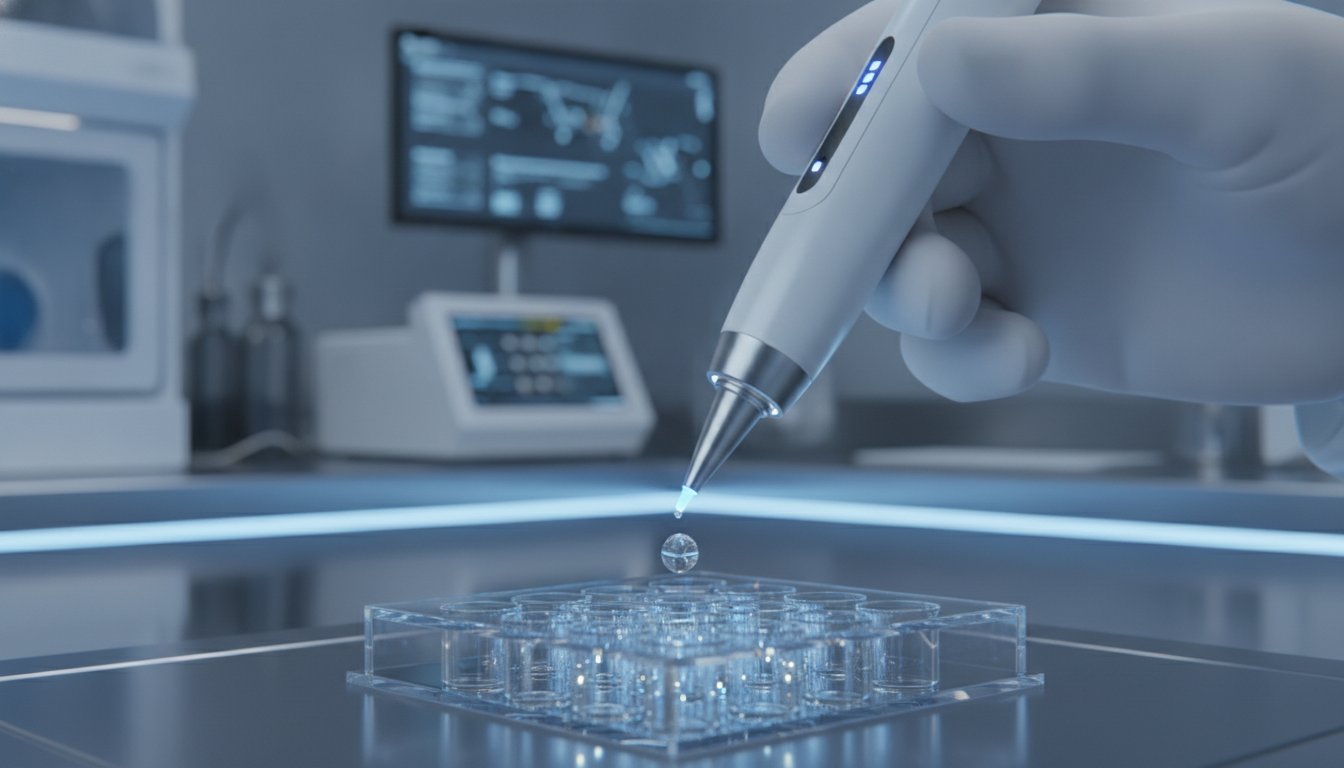
The integrity of your longevity data shouldn't depend on the stability of a bulk powder shipping across three time zones. You've likely dealt with the frustration of inconsistent concentrations or the anxiety of reagent degradation during manual preparation. It's a known bottleneck in cellular senescence assays. By integrating NAD+ 1000mg for in-vitro aging studies into your workflow, you eliminate the variables that compromise your results. This guide explores how high-concentration delivery systems provide the precision necessary for high-stakes research.
Modern research demands more than just raw material. It requires a streamlined process that guarantees 99%+ purity every time. You'll discover how the shift toward pre-filled formats reduces time spent on reagent prep while ensuring your data meets the rigorous standards of 2026 publications. We'll examine the technical advantages of these pens. Resistance to contamination. Stability in demanding lab environments. Accuracy without the guesswork. It's time to move past the friction of traditional methods and focus on the science that matters.
Key Takeaways
- Understand how NAD+ depletion drives senescence via Sirtuin and PARP pathways in accelerated aging models.
- Discover why NAD+ 1000mg for in-vitro aging studies provides the optimal concentration for maintaining aqueous stability during high-throughput screening.
- Reduce protocol friction by switching from inconsistent bulk powder reconstitution to high-precision, pre-filled delivery systems.
- Ensure data integrity with analytical verification methods like HPLC and Mass Spectrometry to guarantee 99%+ reagent purity.
- Eliminate cross-contamination risks and streamline your time-to-assay with standardized research tools designed for 2026 laboratory standards.
The Role of NAD+ in Cellular Senescence and Aging Models
Nicotinamide Adenine Dinucleotide (NAD+) functions as the essential co-enzyme for sirtuins and poly(ADP-ribose) polymerases (PARPs). It isn't merely a passive cofactor. It's a primary regulator of metabolic homeostasis and genomic stability. In accelerated aging models, researchers observe a systemic decline in NAD+ bioavailability. This depletion isn't a byproduct of aging; it's a driver. As levels drop, the balance between cellular repair and senescence shifts. Utilizing NAD+ 1000mg for in-vitro aging studies provides the necessary saturation to study these pathways without the interference of reagent-induced variability.
The mechanism of depletion often stems from the overactivation of NAD-consuming enzymes. CD38 and PARP1 act as major sinks for the intracellular pool. When DNA damage accumulates, the DNA damage response (DDR) triggers PARP1 to facilitate repair. This process consumes vast quantities of NAD+. If the pool isn't replenished, the cell loses the ability to maintain its epigenome. This often leads to the Senescence-Associated Secretory Phenotype (SASP). This pro-inflammatory state characterizes aging cell lines in-vitro, making the control of NAD+ concentration a critical variable in longevity assays.
Sirtuin Activation and Mitochondrial Homeostasis
Sirtuins, particularly SIRT1, require NAD+ to regulate mitochondrial biogenesis and oxidative phosphorylation. High-concentration protocols allow researchers to maintain the flux required for SIRT1-mediated deacetylation of PGC-1α. This activation is vital for mitochondrial health. Precursors like Nicotinamide mononucleotide (NMN) are often studied alongside NAD+ to map these biosynthetic pathways. In aging cell lines, measuring mitochondrial membrane potential provides a direct readout of how effectively NAD+ restores metabolic vigor. Without stable concentrations, these assays produce noisy data that masks the therapeutic potential of longevity compounds.
DNA Repair Mechanisms in In-Vitro Assays
PARP1's role in DNA strand break repair makes it a primary consumer of NAD+. During intense genomic stress, PARP1 can deplete a significant portion of the cellular NAD+ pool within minutes. Designing assays to measure DNA integrity requires a robust supply of high-purity reagents to prevent false negatives in repair efficiency. The intracellular NAD+ concentration directly dictates the catalytic efficiency of PARP1 during poly-ADP-ribosylation events. By utilizing NAD+ 1000mg for in-vitro aging studies, researchers can isolate the effects of experimental variables on DNA repair kinetics. This precision ensures that observations regarding genomic stability are reproducible across different laboratory environments.
Technical Specifications: Why NAD+ 1000mg is the Laboratory Standard
High-throughput screening (HTS) demands a delicate balance between reagent potency and media integrity. Standardizing on 1000mg stocks allows researchers to deliver concentrated doses without significantly altering the volume of the culture medium. This is critical in 96-well or 384-well formats where even a 5% volume shift can introduce osmotic stress. By utilizing NAD+ 1000mg for in-vitro aging studies, you ensure that the biological response observed is a result of the co-enzyme, not a reaction to a diluted environment. Pristine microenvironments are non-negotiable for reproducible results.
Purity isn't a luxury; it's a requirement for publication-grade research. Reagents with less than 99% purity often contain residual solvents or degradation products that trigger off-target effects. For instance, high levels of nicotinamide (NAM) can paradoxically inhibit the very sirtuins you're trying to activate. Maintaining a pH between 6.0 and 7.0 is equally vital. This range preserves the structural integrity of the NAD+ molecule, preventing premature hydrolysis. Understanding the nuances of NAD+ metabolism and cellular senescence requires a reagent that stays stable throughout the duration of the assay.
Concentration Precision for Dose-Response Curves
Calculating molarity becomes a streamlined process with 1000mg/mL stocks. At this concentration, researchers can execute precise serial dilutions that span five or six orders of magnitude. This level of granularity is essential for identifying the IC50 or EC50 in various cell lines. Standardizing delivery across multiple plates ensures that plate-to-plate variability remains negligible. It eliminates the minor inaccuracies inherent in weighing out small quantities of bulk powder, which often lead to inconsistent molarities across experimental replicates.
Stability and Half-Life in Aqueous Solution
Aqueous NAD+ is notoriously sensitive to light and oxidation. Traditional vials lose potency every time the cap is removed. Pre-filled research pens solve this by utilizing a sealed, opaque delivery system that limits environmental exposure. This protection extends the functional half-life of the reagent, ensuring that the concentration at the start of the study remains consistent until the final well is dosed. Monitoring for degradation products like NAM is simpler when starting with a verified, high-purity source. For those requiring consistent results, choosing a standardized NAD+ source reduces the risk of assay failure. Long-term storage at -20°C or -80°C remains the gold standard for preserving these high-concentration stocks over several months.
Optimizing In-Vitro Protocols: Pre-filled Pens vs. Bulk Powder
Manual reconstitution of bulk powder is a liability in high-stakes research. It introduces weighing errors, solubility issues, and the risk of ambient moisture exposure. For labs utilizing NAD+ 1000mg for in-vitro aging studies, the transition to pre-filled pens represents a significant leap in procedural efficiency. While traditional methods require time-consuming calculations and multi-step filtration, pre-filled systems offer immediate deployment. This reduces the time-to-assay from hours to minutes. It allows your team to focus on data collection rather than reagent logistics.
Reproducibility hinges on click-precise dosing. Manual pipetting from a bulk stock solution often introduces micro-variations that compound across a 96-well plate. Pre-filled pens provide a mechanical guarantee of volume accuracy. This precision is vital when investigating The Role of NAD+ in Cellular Aging, where subtle shifts in concentration can lead to vastly different phenotypes. Bulk buying might seem cost-effective initially. However, the financial implications of reagent waste and failed assays due to degradation often negate those perceived savings. Sealed delivery systems ensure every milligram is used efficiently.
Aseptic Handling and Contamination Control
Maintaining sterility within a cell culture hood is easier when you eliminate open-vial powder handling. Pre-filled injectors provide a closed-loop delivery system. This minimizes the exposure of your reagent to ambient air and potential contaminants. Researchers interested in improving lab workflow with pre-filled pens often find that the reduction in contamination incidents leads to a more robust data set. It removes one of the most common points of failure in long-term cell culture experiments.
Standardizing Multi-User Laboratory Environments
Variation between researchers is a hidden variable that compromises longitudinal studies. One technician might stir a solution longer than another; another might use a different filtration grade. Standardized pens eliminate this inter-user variability. Every member of the team uses the same delivery mechanism and the same verified concentration. This ensures that lot usage remains consistent across months of data collection. Training new staff becomes faster. The human element of reagent preparation is effectively removed from the equation. This allows the team to focus entirely on the biological outcomes of their NAD+ 1000mg for in-vitro aging studies.

Verification and Integrity: Ensuring Purity in Aging Assays
Data integrity in 2026 requires more than a standard supplier claim. High-impact journals increasingly demand lot-specific verification to ensure that experimental outcomes aren't skewed by impurities. When utilizing NAD+ 1000mg for in-vitro aging studies, the primary tool for verification is High-Performance Liquid Chromatography (HPLC). This process quantifies the purity level by separating the co-enzyme from any residual synthesis byproducts. However, purity alone isn't enough. Mass Spectrometry (MS) must accompany HPLC to confirm the molecular mass and identity of the compound. Without this dual-layer verification, you risk publishing data based on degraded or incorrectly identified reagents.
Interpreting a Certificate of Analysis (COA) is a core competency for modern researchers. A valid COA should provide a clear chromatogram, a specific lot number, and a timestamped analysis. It's your roadmap to reagent reliability. If a supplier can't provide these documents upon request, the risk to your research timeline is too high. Ensuring these standards are met before the first pipette tip is loaded is the only way to safeguard your laboratory's reputation. Transparency in reporting is the bridge between a successful pilot and a reproducible study.
Independent Third-Party Analytical Testing
Relying solely on in-house manufacturer data creates a blind spot. Independent third-party testing through facilities like Janoshik Analytical provides an unbiased layer of security. These labs verify not just the purity, but also the pH levels of the reconstituted solution. A pH outside the 6.0 to 7.0 range can induce cellular stress, potentially masking the actual effects of the NAD+ on your aging models. Independent third-party verification serves as the gold standard for maintaining radical transparency and research integrity in the longevity field.
Cold Chain Logistics for Reagent Stability
The molecular structure of NAD+ is highly sensitive to thermal fluctuations. Even brief exposure to ambient temperatures during shipping can trigger the formation of inhibitory degradation products. Verifying cold chain integrity upon delivery is a non-negotiable step in your protocol. For international shipments, understanding the complexities of Customs Clearance for Research Chemicals is essential to prevent delays that could compromise reagent stability. If you require reagents that have undergone rigorous analytical screening and are handled with clinical precision, you can access high-purity NAD+ 1000mg stocks here to ensure your assays remain uncompromised.
ReadyPep NAD+ 1000mg: Precision Tools for Longevity Research
ReadyPep bridges the gap between theoretical longevity science and practical bench-side execution. The NAD+ 1000mg research pen is specifically engineered for the rigors of 2026 aging research. Manufactured under the uncompromising standards of Metatide Healthcare, these pens ensure your starting material is never a source of experimental noise. We prioritize empirical verification over marketing claims. Every unit represents a commitment to clinical precision. By providing NAD+ 1000mg for in-vitro aging studies in a standardized format, we eliminate the variables that typically plague high-concentration assays.
Research continuity depends on a robust and reliable supply chain. ReadyPep provides free worldwide cold-chain shipping to maintain the molecular integrity of every reagent. We understand that a single temperature spike during transit can ruin months of preparation. Our logistics are designed to prevent degradation. This ensures that the co-enzyme arrives at your facility with its structural integrity fully intact. We act as a transparent partner for scientific personnel. We provide the tools you need to move from hypothesis to high-impact publication without the friction of reagent instability.
Integration with Other Research Protocols
Longevity is rarely a single-molecule study. The synergistic application of NAD+ with other compounds can reveal complex cellular interactions. For example, combining NAD+ 1000mg for in-vitro aging studies with GHK-Cu 100mg allows researchers to explore the intersection of metabolic health and extracellular matrix remodeling in fibroblast models. Those focusing on mitochondrial signaling often integrate the MOTS-c 40mg protocol to map energy dynamics more accurately. Advanced labs frequently utilize the Reserve Protocol to build multi-dimensional aging models that require absolute reagent precision across all components.
Securing High-Purity Reagents for 2026 Projects
Procurement shouldn't be a bottleneck for discovery. We've streamlined the acquisition process for both academic institutions and private research facilities. Transparency is our core value. You can access lot-specific HPLC and pH documentation directly through our platform. This removes the administrative burden of manual verification. It allows your team to focus on the science. Whether you're scaling a high-throughput screen or conducting a targeted pilot, our inventory is ready to support your timeline. Don't let inconsistent reagents compromise your data. Secure your NAD+ 1000mg research pens for your next study here and ensure your results meet the highest standards of the scientific community.
Standardizing Precision in Cellular Longevity Research
The integrity of your senescence assays hinges on the stability and purity of your reagents. You've seen how pre-filled delivery systems eliminate the variables that compromise longitudinal data. By integrating NAD+ 1000mg for in-vitro aging studies into your protocol, you ensure that every dose-response curve is built on a foundation of absolute precision. Manual reconstitution is no longer a viable standard for high-impact research. It's time to prioritize efficiency and reproducibility.
ReadyPep delivers this certainty through independent lot testing by Janoshik Analytical. Our strictly in-vitro laboratory grade compounds are protected by free global cold-chain shipping to prevent molecular degradation during transit. You don't have to settle for inconsistent bulk powders or questionable purity levels. Secure your research continuity with a partner that values radical transparency and empirical verification. It's a straightforward shift that protects your time and your laboratory's reputation.
Order High-Purity NAD+ 1000mg for In-Vitro Research to guarantee publication-grade results for your next project. We're ready to support your next breakthrough in aging science.
Frequently Asked Questions
Is NAD+ 1000mg suitable for in-vivo animal studies?
No, ReadyPep provides NAD+ 1000mg for in-vitro aging studies exclusively for laboratory research. These compounds aren't intended for human or veterinary use, including in-vivo animal models. Our focus is providing high-purity reagents for bench-side assays and cellular models where precision is paramount.
How do I calculate the concentration of NAD+ in my cell culture media using a 1000mg pen?
Calculate your working concentration based on the 1000mg/mL stock provided in the pen. Since the molecular weight of NAD+ is approximately 663.43 g/mol, your stock concentration is roughly 1.5M. This high concentration allows for minimal volume displacement when diluting to micromolar levels in your media.
What is the shelf life of a pre-filled NAD+ pen after the first use?
Use the pen within 28 days once it's been activated to ensure maximum stability. It's essential to store the pen in a refrigerated environment at 2-8°C between uses. For long-term storage of unopened units, we recommend maintaining a temperature of -20°C to preserve molecular integrity.
Why is pH testing critical for NAD+ 1000mg aqueous solutions?
NAD+ is highly sensitive to pH fluctuations which can trigger rapid hydrolysis. Maintaining a range between 6.0 and 7.0 is vital for reagent stability and preventing cellular toxicity. Testing ensures that the biological response you measure is due to the co-enzyme and not environmental stress from the solution.
Can I use ReadyPep NAD+ 1000mg for human clinical trials?
No, these products are research-grade chemicals and are not approved for human clinical trials or therapeutic use. They don't meet the stringent regulatory standards required for pharmaceutical applications. Their use is strictly limited to in-vitro laboratory environments for analytical and experimental purposes.
What happens if the cold chain is broken during the shipping of my research peptides?
Thermal exposure can lead to significant molecular degradation and a loss of potency. ReadyPep utilizes free global cold-chain shipping to prevent these fluctuations from occurring during transit. If the cold chain is compromised, the reagent may contain degradation products like nicotinamide that interfere with your assay results.
How does HPLC testing ensure the quality of NAD+ for senescence studies?
HPLC testing separates the NAD+ molecule from synthesis byproducts to quantify the exact purity level. This ensures that your NAD+ 1000mg for in-vitro aging studies is free from contaminants that could inhibit sirtuin activity. It provides the empirical verification necessary for high-impact scientific publications.
Are there any volume-based discounts for large-scale high-throughput screenings?
Yes, we offer bulk procurement options to support large-scale screening projects and institutional needs. Accessing these discounts allows labs to maintain lot-consistency across thousands of experimental replicates. Contact our support team to discuss specific pricing structures for your high-volume research requirements.
Disclaimer
Educational content only. Not medical advice.


